
Microsoft pledges $50 billion to tackle AI inequality as it warns of a ‘growing divide’
Microsoft announces a $50 billion initiative to address global AI inequality and expand access to digital infrastructure. The company warns that uneven adoption could widen economic and technological gaps worldwide.
James K. Thornton|World Affairs Editor
Feb. 18, 2026

Microsoft has announced a sweeping $50 billion commitment aimed at addressing what it describes as a growing global divide in access to artificial intelligence, warning that unequal adoption of the technology could deepen economic disparities between countries, industries, and communities. The initiative, which spans infrastructure, training, partnerships, and responsible development, reflects mounting concern within the technology sector that the rapid acceleration of AI could concentrate opportunity in a limited number of regions and organizations. Company leaders said the investment is designed to expand access to computing power, cloud services, and digital skills in underserved areas, while supporting governments and institutions seeking to integrate AI into public services and economic development strategies. The announcement comes at a time when demand for advanced computing capacity is surging, driven by the rapid expansion of generative AI systems and large-scale data processing. Microsoft executives warned that without targeted intervention, AI risks becoming a technology available primarily to wealthy nations, large corporations, and well-funded research institutions. Such a concentration, they said, could reinforce existing economic imbalances and limit the broader productivity gains that AI promises to deliver. The funding will be directed toward several major priorities. A significant portion will support the expansion of cloud and data center infrastructure in regions that currently lack sufficient computing capacity. Access to high-performance computing has emerged as one of the main bottlenecks in AI development, as advanced models require vast amounts of processing power and storage. Another major focus of the initiative is workforce development. Microsoft plans to expand training programs aimed at equipping workers, students, and small business owners with practical AI skills. These programs will be delivered through partnerships with universities, technical institutes, nonprofit organizations, and government agencies. The goal is to ensure that AI adoption supports job transformation rather than widening employment gaps. Company officials emphasized that the future impact of AI will depend heavily on how broadly skills are distributed. ensure people understand how to use AI tools effectively, they said, will be critical for enabling productivity gains across sectors such as healthcare, education, manufacturing, and public administration. The initiative also includes support for small and medium-sized enterprises, which often face barriers to adopting advanced technologies due to cost and expertise constraints. Microsoft said it will expand access to affordable cloud-based AI services and provide technical assistance to help smaller organizations integrate automation, analytics, and intelligent applications into their operations. Public sector collaboration is another key component of the effort. Governments around the world are exploring how AI can improve service delivery, from managing transportation systems to enhancing public health surveillance and streamlining administrative processes. Microsoft said it will work with national and local authorities to develop responsible deployment frameworks and ensure that public-sector adoption aligns with privacy, security, and ethical standards. The company’s warning about a widening AI gap reflects broader concerns among economists and policy experts. Early evidence suggests that advanced AI capabilities are heavily concentrated in a small number of countries with strong research ecosystems, abundant capital, and robust digital infrastructure. At the same time, many developing economies face limited connectivity, high computing costs, and shortages of specialized talent. If these trends continue, analysts say, the productivity gains associated with AI could accrue disproportionately to already advanced economies, potentially widening global income gaps. Within countries, similar disparities could emerge between large technology-intensive firms and smaller businesses, as well as between high-skilled and low-skilled workers Microsoft’s announcement also highlights the growing role of private technology companies in shaping the global AI landscape. With governments still developing comprehensive regulatory and investment strategies, major cloud providers have become central players in determining where computing resources are built and how access is structured. The company said responsible AI development will be embedded across the initiative. This includes investments in safety research, transparency tools, and governance frameworks designed to address risks such as bias, misinformation, and misuse. Leaders stressed that expanding access must go hand in hand with strong safeguards to ensure that AI systems are deployed in ways that benefit society.
Environmental sustainability will also be a consideration, according to the company. Data centers require significant energy and water resources, and Microsoft said new infrastructure projects will incorporate efficiency technologies and renewable energy where possible. Balancing the expansion of computing capacity with climate goals has become an increasingly important issue as AI workloads grow more energy-intensive. Industry observers view the scale of the commitment as both a strategic business move and a policy signal. By expanding infrastructure and training in emerging markets, Microsoft positions itself to capture future demand for cloud services while also addressing regulatory and reputational pressures related to technology access and equity. Competition within the technology sector may also accelerate similar initiatives from other companies. As AI becomes a foundational layer of economic activity, access to computing resources is increasingly viewed as critical infrastructure, comparable to electricity or broadband connectivity. However, some experts caution that private investment alone will not be sufficient to close the AI gap. They argue that governments will need to complement corporate initiatives with public funding for education, research, and digital infrastructure, particularly in lower-income regions. Policy frameworks that encourage open standards, data sharing, and cross-border collaboration could also play a role in broadening access. Civil society organizations have welcomed the focus on inclusion but stressed the importance of accountability and measurable outcomes. They have called for transparent reporting on where infrastructure is built, who receives training, and how benefits are distributed across different communities. The initiative arrives amid growing debate about the broader economic effects of AI. While the technology has the potential to boost productivity and create new industries, it is also expected to disrupt existing jobs and reshape labor markets. Ensuring that workers have access to retraining and transition support will be a major challenge for both companies and policymakers. Microsoft leaders framed the investment as part of a longer-term vision in which AI becomes a general-purpose technology accessible to organizations of all sizes and regions. They argued that broad adoption is not only a social priority but also essential for sustaining innovation, as diverse users generate new applications and insights. Education systems are expected to play a central role in this transition. The company said it will expand collaborations with schools and universities to integrate AI literacy into curricula, from basic digital skills to advanced technical training. Preparing students for an AI-enabled economy, executives said, requires early exposure as well as opportunities for continuous learning throughout their careers. Healthcare and agriculture were identified as sectors where expanded AI access could deliver significant social benefits, particularly in developing regions. Applications such as diagnostic support, resource optimization, and predictive analytics could improve outcomes while reducing costs, provided that infrastructure and expertise are available locally. Despite the ambitious scope of the initiative, challenges remain. Building data centers and training programs takes time, and the pace of AI development continues to accelerate. There is also ongoing debate about data governance, cross-border data flows, and national strategies aimed at developing domestic AI capacity. The company acknowledged that addressing inequality in AI will require sustained collaboration across industry, government, academia, and international organizations. No single initiative, executives said, can resolve the issue alone. As AI becomes increasingly central to economic competitiveness and public services, the question of who has access to its capabilities is likely to become a defining policy issue of the coming decade. Microsoft’s $50 billion pledge underscores the scale of the challenge and the growing recognition that the benefits of AI will depend not only on how powerful the technology becomes, but also on how widely it is shared.
POPULAR

White House Defends Trump Pardon of Wanda Vázquez
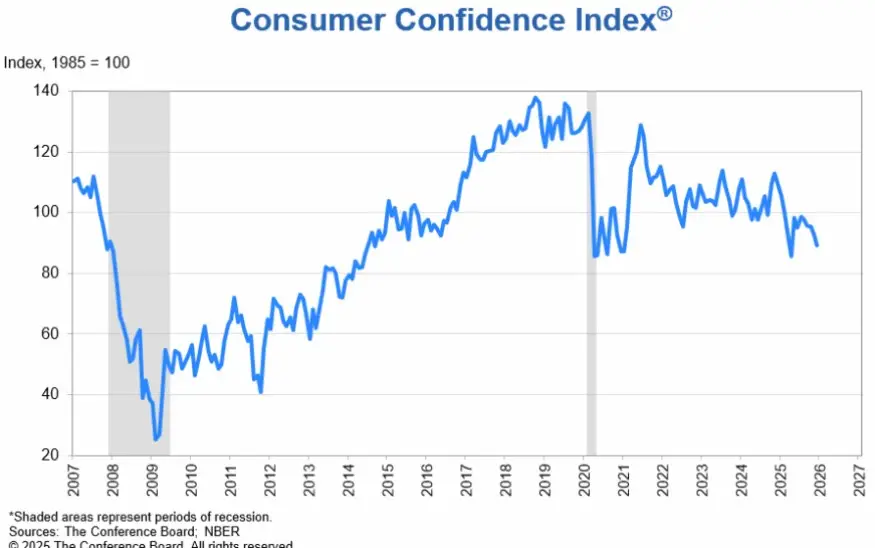
U.S. Consumer Confidence Fell Again in December