
How the Agency‑Client Relationship Will Change in 2026: AI Gets Real and Talent Goes In‑House
PRWeek reports that 2026 will bring major shifts in agency‑client dynamics, with clients moving work in‑house, deeper AI adoption, and agencies’ roles refocusing on strategic expertise.
James K. Thornton|World Affairs Editor
Dec. 18, 2025

Industry leaders say 2026 will mark a turning point for the agency‑client relationship as clients increasingly bring communications talent in‑house, deepen their use of artificial intelligence, and expect more measurable business outcomes from their external partners. According to PRWeek’s annual look ahead at how the profession will evolve, AI is expected to shift from experimental use to operational maturity, with organizations building clear AI strategies and embedding them across functions rather than treating them as ad‑hoc tools. Clients that fail to adopt and communicate an AI strategy risk lagging behind, according to chief executives in the professional services space. Another trend leaders highlighted is the rise of in‑house talent: as layoffs and industry restructuring make skilled practitioners more widely available, more companies are recruiting seasoned agency professionals directly into internal roles. This movement reflects broader client impatience with agency consolidations, an increased preference for specialized, senior teams, and a push to reduce reliance on large, generalist firms.
PR leaders also predict that clients will demand more value and accountability, favoring campaigns tied to clear business outcomes — such as revenue influence, brand protection, and reputation management — over traditional measures like impressions or share of voice. To stay relevant, agencies will need to pivot toward deep specialization in areas like issues management, employee engagement, sustainability, and crisis response, while still knitting these capabilities into cohesive programs. The narrative around AI is particularly notable: forward‑looking clients are expected to use AI to automate basic tasks, accelerate execution, and derive insights that tie communications work directly to commercial impact, putting pressure on agencies to demonstrate how they can integrate with client workflows and deliver measurable returns. Smaller, flexible agency teams and specialist “pods” are seen as more attractive partners than large roster models, and pricing models may evolve away from billable hours toward outcome‑based or project‑linked structures. Overall, the shift reflects how technology, talent mobility, and outcome expectations are reshaping the traditional agency‑client partnership, with an emphasis on judgment, creativity, and business impact as key differentiators in 2026 and beyond.
POPULAR
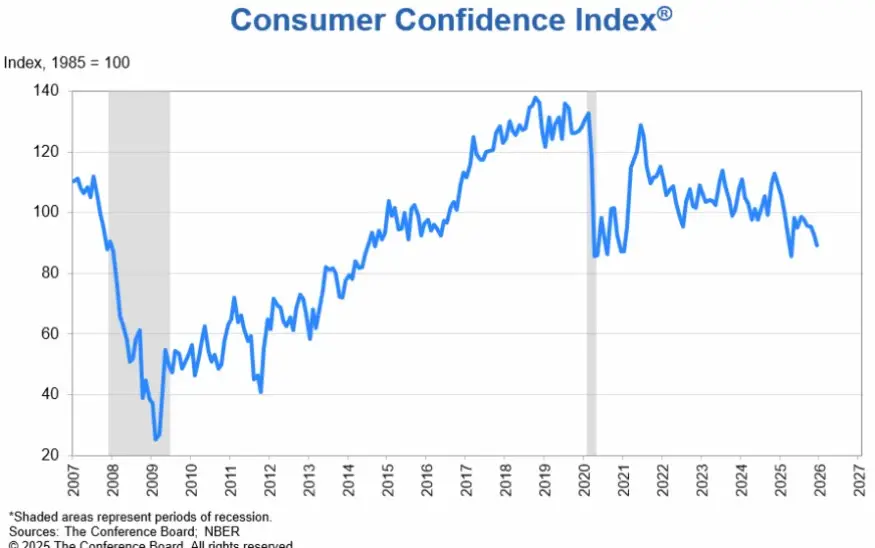
U.S. Consumer Confidence Fell Again in December

PR Firm BPCM Names New Leadership