Trump heads to Fort Bragg to cheer special forces members who ousted Venezuela’s Maduro
President Donald Trump is traveling to Fort Bragg in North Carolina to honor U.S. special forces members credited with ousting Venezuelan leader Nicolás Maduro in a high‑profile operation. First Lady Melania Trump will join him as they meet troops and military families at one of the largest U.S. Army bases.
Julia Thompson|Technology Reporter
Feb. 13, 2026

President Donald Trump’s scheduled visit to Fort Bragg, North Carolina, on Friday represents a highly symbolic and politically charged moment as he travels to personally commend the U.S. special forces troops whose dramatic operation earlier this year resulted in the capture and removal of Venezuelan President Nicolás Maduro, a mission that has reshaped U.S. foreign policy in Latin America and sparked wide‑ranging debate both domestically and internationally; the Fort Bragg appearance — which also includes First Lady Melania Trump spending time with military families — is set against the backdrop of the operation known variously as “Operation Absolute Resolve,” in which elite U.S. forces reportedly executed a daring raid in Caracas on January 3, 2026, seizing Maduro and his wife and flying them out of Venezuela to face smuggling and narco‑terrorism charges in New York, a stunning outcome that underscores the Trump administration’s willingness to employ decisive military force in pursuit of its geopolitical goals, a strategy the president has framed as central to a broader doctrine he and allies refer to as the “Donroe Doctrine,” invoking 19th‑century Monroe Doctrine principles to assert continued U.S.
influence throughout the Western Hemisphere and counter perceived threats from rival powers, particularly China; Trump’s Fort Bragg stop is also widely interpreted as part of his ongoing campaign to rally support ahead of critical midterm elections, highlighting his administration’s commitment to strong national defense, support for the military, and forceful action abroad, while critics argue the operation raises profound legal and ethical questions about executive power, the role of Congress in authorizing military engagements, and the long‑term implications for regional stability in Venezuela and beyond, where the aftermath of Maduro’s ousting has prompted both cautious optimism among activists calling for democratic reforms and serious concerns regarding the residual authority of Maduro’s former regime and the humanitarian challenges facing Venezuelans displaced by years of authoritarian rule; moreover, Trump’s visit spotlights the political polarization in the United States itself, with supporters lauding the bravery and effectiveness of U.S. special operations forces and the administration’s willingness to take bold action, while opponents warn of reckless military adventurism that could destabilize the region and strain international norms, all as debates continue over the operation’s real objectives, which range from dismantling drug trafficking networks labeled “narco‑terrorist” organizations to securing U.S. strategic interests in oil and other resources, making the Fort Bragg event this week not only a tribute to soldiers but a flashpoint for discussions about America’s role on the world stage, civil‑military relations, and the intersection of foreign policy and domestic politics.
POPULAR
White House Defends Trump Pardon of Wanda Vázquez
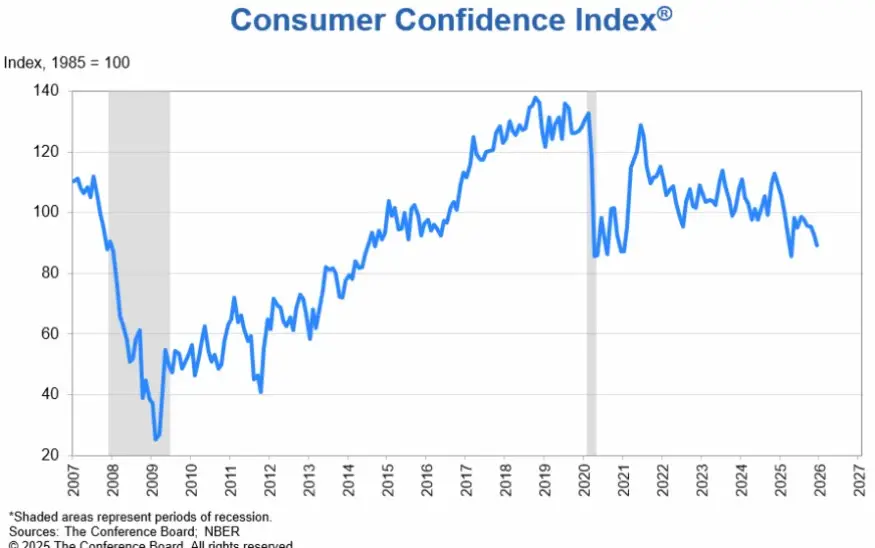
U.S. Consumer Confidence Fell Again in December