
Gabbard’s office warns attorney against sharing classified complaint with Congress
Director of National Intelligence Tulsi Gabbard’s office has warned a whistleblower’s attorney that briefing members of Congress on a highly classified complaint could violate federal law, intensifying a political and legal dispute over the handling and timing of the complaint’s delivery to lawmakers.
Patrick Rowe|Senior Correspondent
Feb. 10, 2026

A high-stakes dispute has unfolded in Washington, D.C., drawing intense scrutiny from lawmakers on both sides of the political aisle after the Office of the Director of National Intelligence (ODNI) warned a whistleblower’s attorney against sharing a highly classified complaint with members of Congress. The warning letter, sent by ODNI General Counsel Jack Dever to attorney Andrew Bakaj on February 9, 2026, underscores deep tensions between national security safeguards, whistleblower protections, and congressional oversight of the U.S. intelligence community. Under longstanding federal law governing intelligence whistleblowers, employees may bring complaints about wrongdoing to the Intelligence Community Inspector General (ICIG). In some cases, a whistleblower may directly inform Congress if an inspector general deems the complaint both credible and of “urgent concern.” However, in this case, the initial reviewer—then-acting Inspector General Tamara Johnson—found that one of the complaint’s key allegations, regarding political misuse of classified material, did not appear credible, while another allegation could not be fully assessed. The complaint was ultimately administratively closed in June 2025 by Johnson’s successor, Christopher Fox, but controversy over its handling endured. Bakaj, a former CIA officer who represents the whistleblower, subsequently sought to brief members of the House and Senate intelligence committees about the complaint. His offer to meet with lawmakers or staff prompted a strongly worded response from ODNI’s general counsel, who warned that doing so could violate federal statutes prohibiting the unauthorized disclosure of classified information. The letter explicitly stated that because the complaint contains “highly classified” material, any direct briefing by Bakaj or his client could expose them to criminal liability if they improperly divulged or mishandled the content. It also noted that while Bakaj “may have other means of appearing in front of Congress,” briefing lawmakers directly on the complaint in its current form was not permissible under the security guidelines governing classified information. The warning letter has drawn sharp reactions from lawmakers and legal experts, reflecting deep partisan divisions. Democrats such as Senator Mark Warner of Virginia, the vice chair of the Senate Intelligence Committee, have criticized the lengthy delay in making the complaint available to lawmakers. Warner has argued that under federal law, intelligence agencies are required to forward whistleblower complaints to congressional intelligence committees within 21 days if the inspector general designates them as urgent and credible. Warner and other critics contend that the complaint should have been relayed to Congress much earlier, and they see the warning to Bakaj as part of a troubling pattern of opacity surrounding the complaint’s handling. In response, ODNI and Gabbard’s office have defended their actions, emphasizing the extraordinary sensitivity of the classified intelligence involved. Gabbard herself took to social media to refute accusations that she “hid” the complaint or obstructed its transmission. In a post on the platform X, she stated that she had never possessed or controlled the complaint and that it was, for months, maintained by the intelligence community’s inspector general due to its classified status. According to Gabbard’s account, she only learned in December 2025 that she needed to provide security guidance to enable its secure delivery to Congress—a step she said she “took immediate action” to complete. Republican lawmakers have largely defended Gabbard and the ODNI, with Senate Intelligence Committee Chairman Tom Cotton of Arkansas expressing the view that the complaint did not appear credible and that the intelligence community acted in accordance with applicable law.
“Director of National Intelligence Tulsi Gabbard’s office has warned a whistleblower’s attorney that briefing members of Congress on a highly classified complaint could violate federal law, intensifying a political and legal dispute over the handling and timing of the complaint’s delivery to lawmakers.”
Cotton has characterized the allegations as politically motivated efforts to undermine Gabbard and broader administration policies. This partisan split has made it less likely that the intelligence committees will pursue aggressive investigations, at least among members from the Republican side who control both panels. Central to the dispute is the complex interplay between national security protections and transparency in whistleblower cases. While whistleblower protections are designed to ensure that complaints about wrongdoing within the government can be shared with Congress, these protections are subject to strict rules when classified information is involved. Intelligence professionals and lawyers note that when a complaint involves highly compartmented intelligence, traditional channels for reporting to Congress may require special security arrangements, including controlled briefings or restricted-access sessions where lawmakers receive the information under strict safeguards designed to prevent unauthorized disclosure. Lawmakers in the “Gang of Eight”—a congressional group composed of the Senate and House leadership plus the top members of the intelligence committees—began receiving hand-delivered copies of the complaint beginning last week, under procedures intended to protect the classified material. Additional sessions for broader committees are being scheduled, though details about those meetings and how the information will be shared remain fluid. Despite these arrangements, the handling of the complaint has renewed broader questions about the independence of the intelligence community and the appropriate balance between secrecy and oversight. Critics argue that an eight-month delay in forwarding the complaint—regardless of how sensitive the content was—raises concerns about accountability and responsiveness to statutory whistleblower protections. Supporters counter that when national security interests intersect with oversight responsibilities, caution and strict adherence to security protocols must guide how information is shared with lawmakers to avoid unintentional exposure of critical intelligence or sources and methods. Adding to the controversy are reports from news outlets that the origins of the classified complaint involve sensitive foreign intelligence reporting, allegedly linked to communications intercepted by the National Security Agency referencing an individual close to former President Trump. While the contents of the complaint have not been independently verified, and details remain shielded under classification restrictions, the reports have fueled political debate and media scrutiny over both the complaint’s substance and the timeline of its transmission. The clash between Gabbard’s office and Bakaj highlights a broader legal and ethical dilemma: how to honor the spirit of whistleblower protections when the subject matter of a complaint is so highly classified that even authorized attorneys and lawmakers can only access it under very strict conditions. This dilemma has sparked debate among legal scholars about whether existing law sufficiently addresses the unique challenges posed by intelligence whistleblower cases, and whether reforms are needed to ensure timely, secure, and legally compliant reporting mechanisms. What happens next remains uncertain. Congressional hearings, additional briefings, and potential legislative or judicial actions could emerge as lawmakers continue to pressure the ODNI for clarity. Meanwhile, Gabbard and her legal team maintain that they have acted in accordance with legal requirements and that decisions about how to handle classified material must prioritize national security while also respecting statutory mandates for oversight. In sum, the dispute over the classified complaint and the warning to Attorney Andrew Bakaj exemplifies the fraught terrain where intelligence secrecy, whistleblower rights, and political partisanship intersect. As the situation unfolds, it is likely to remain a focal point for debates about the balance between transparency, accountability, and protection of sensitive national security information.
POPULAR
White House Defends Trump Pardon of Wanda Vázquez
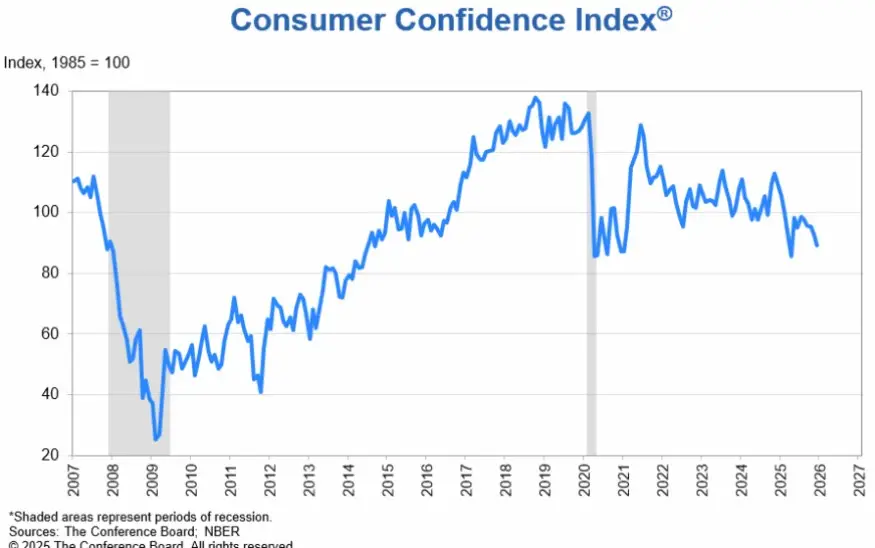
U.S. Consumer Confidence Fell Again in December