
Sanae Takaichi Makes History as Supermajority Victory Sparks Nikkei 225 Surge
Japan’s financial markets rallied after Prime Minister Sanae Takaichi’s ruling party secured a historic supermajority in the national election, pushing the Nikkei 225 higher and signaling strong investor confidence in her economic and policy agenda.
Patrick Rowe|Senior Correspondent
Feb. 9, 2026

Japan has entered a defining political and economic moment following the historic national election victory of Prime Minister Sanae Takaichi, whose ruling party secured a powerful supermajority that has reshaped the country’s leadership landscape and immediately boosted investor sentiment, triggering a sharp rise in the Nikkei 225, Japan’s benchmark stock index, as markets reacted positively to the promise of strong political stability, policy continuity, and a clear long-term economic direction at a time when global investors are increasingly seeking certainty amid geopolitical tensions, inflation concerns, and slowing growth in several major economies; the election result is widely seen as a turning point not only because of the scale of the mandate but also because it gives the administration the legislative strength needed to implement structural reforms, fiscal initiatives, and strategic industrial policies without the delays and compromises that often accompany divided government, and this overwhelming political support has significantly reduced policy uncertainty, one of the most critical factors influencing financial markets, corporate investment decisions, and foreign capital inflows, leading to renewed confidence in Japan’s economic outlook as traders and institutional investors quickly increased exposure to Japanese equities, particularly in export-oriented sectors such as automotive, machinery, electronics, and advanced manufacturing that benefit from stable policy frameworks, a competitive currency environment, and government-backed innovation strategies; the immediate rally in the Nikkei 225 reflects expectations that the Takaichi administration will prioritize pro-growth policies including expanded support for high-tech industries such as semiconductors, artificial intelligence, robotics, and next-generation manufacturing, areas where Japan aims to strengthen its global competitiveness and reduce strategic dependence on foreign supply chains, while also continuing corporate governance reforms that have already begun improving shareholder returns through increased dividends, share buybacks, and better capital efficiency, making Japanese companies more attractive to both domestic and international investors who have historically viewed the market as undervalued compared to other developed economies; beyond corporate reforms, analysts anticipate targeted fiscal measures designed to stimulate domestic demand, support small and medium-sized enterprises, and address household cost pressures, particularly as Japan continues its gradual transition away from decades of deflation toward a more sustainable inflation environment supported by rising wages and stronger consumer spending, a delicate shift that requires careful coordination between government fiscal policy and the Bank of Japan’s evolving monetary stance as the central bank cautiously moves toward policy normalization after years of ultra-loose conditions, meaning that political stability plays a crucial role in ensuring smooth communication, market confidence, and controlled adjustments to interest rates and bond market operations; the election outcome also carries broader strategic implications as the government is expected to place greater emphasis on economic security, supply chain resilience, and energy stability, including incentives for domestic production of critical components, investments in renewable and nuclear energy capacity to reduce import dependence, and stronger economic partnerships with allied nations to safeguard trade flows and technological leadership in an increasingly fragmented global economy, all of which contribute to a more resilient investment environment that appeals to long-term institutional capital such as pension funds and sovereign wealth managers; however, despite the optimism reflected in the market rally, Japan still faces significant structural challenges that the new administration must address, including a rapidly aging population, declining workforce size, labor shortages across key industries, high public debt levels, and productivity gaps in certain service sectors, issues that will require comprehensive reforms such as labor market flexibility, digital transformation across public and private sectors, increased workforce participation among women and older citizens, immigration policy adjustments, and continued investment in automation and smart infrastructure to sustain economic growth over the long term; public expectations are also high following the decisive election result, with voters looking for tangible improvements in wage growth, regional economic revitalization, housing affordability, and energy cost stability, making effective policy execution essential to maintaining political momentum and market confidence, while at the same time Japan’s strengthened leadership position may enhance its role in regional economic cooperation, trade negotiations, and security coordination across the Asia-Pacific, further reinforcing the country’s status as a stable and reliable economic power at a time when geopolitical risks remain elevated in multiple regions; sector-level outlooks following the election suggest potential upside in technology and semiconductor manufacturing due to government subsidies and strategic investment programs, defense and aerospace industries as national security spending increases, green energy and infrastructure companies benefiting from decarbonization initiatives and modernization projects, financial institutions that stand to gain from gradual interest rate normalization and improved loan demand, and consumer sectors that could see stronger performance if wage growth and confidence continue to improve, all contributing to a broader narrative that Japan may be entering a new phase of economic momentum supported by policy clarity, corporate reform, and renewed investor interest; foreign investment trends will be particularly important to watch, as international funds have already increased allocations to Japanese equities over the past year due to governance improvements, attractive valuations, and currency advantages, and the supermajority victory further strengthens the case for sustained inflows by signaling that reform efforts are unlikely to reverse in the near term, reducing political risk premiums and encouraging long-term positioning rather than short-term trading strategies; at the currency level, market participants will monitor how fiscal expansion, monetary adjustments, and global interest rate differentials influence the yen, since exchange rate movements play a major role in export competitiveness and corporate earnings, especially for large multinational manufacturers that dominate the Nikkei index, meaning that coordinated and transparent policy communication will remain essential to avoid excessive volatility; overall, the combination of a historic electoral mandate, immediate stock market gains, strengthened investor confidence, and expectations of structural reform has positioned Japan at a potentially pivotal moment where political authority, economic strategy, and market momentum are aligned, creating an environment that could support sustained growth, improved corporate performance, and enhanced global competitiveness if policy execution remains disciplined and responsive to both domestic needs and international economic conditions, making the rise of Prime Minister Sanae Takaichi not only a milestone in the country’s political history but also a development with far-reaching implications for financial markets, business strategy, and Japan’s role in the global economic landscape over the coming years..
“Japan’s financial markets rallied after Prime Minister Sanae Takaichi’s ruling party secured a historic supermajority in the national election, pushing the Nikkei 225 higher and signaling strong investor confidence in her economic and policy agenda.”
POPULAR

White House Defends Trump Pardon of Wanda Vázquez
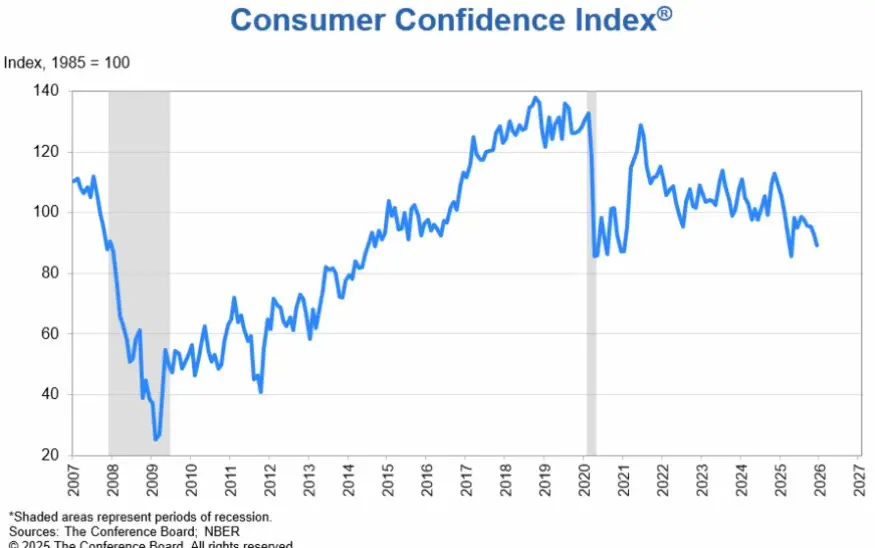
U.S. Consumer Confidence Fell Again in December